
Holiness—what does it really mean that God is holy?
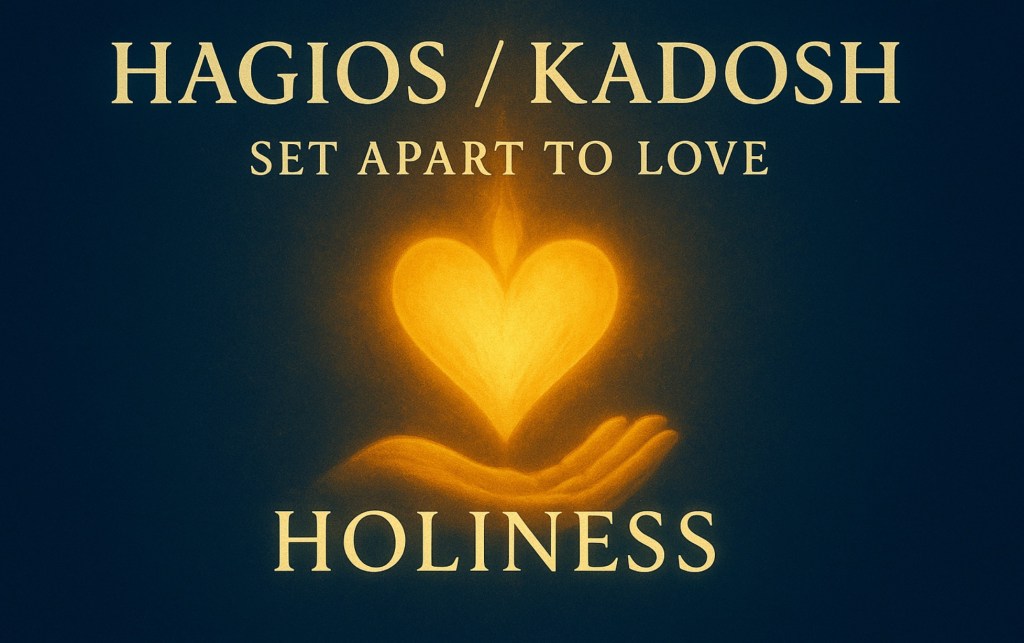
📜 Original Language
Greek: ἅγιος (hagios) — “set apart,” “different,” “belonging to God.”
Hebrew: קָדוֹשׁ (qadosh) — “unique,” “sacred,” “other,” “separate from the common.”
❌ Misunderstood: Holiness as God’s Defining Attribute
Many theologians and Christians have assumed that holiness is God’s central characteristic. They point to Isaiah 6:3—“Holy, holy, holy is the LORD of hosts; the whole earth is full of his glory”—and conclude that God is defined by holiness itself.
But a closer look shows something different. Saying “holy, holy, holy” is more like saying unique, unique, unique. The text amplifies God’s uniqueness, not a moral perfection in isolation. Holiness describes how utterly different God is from everything else, not what makes Him fundamentally God. It is a marker of distinctness, a word that points to the essence that sets Him apart—but it doesn’t, by itself, reveal what makes Him set apart.
🌍 Holiness in the Ancient Near East: Defined by What a God Is
In the surrounding cultures, gods were called “holy” because of their essence—what made them unique and powerful:
– Baal was “holy” because he was fertility, expressed in rain and crop abundance. His priests were intermediaries, called to harness his essence to produce growth for the land.
– Shamash, the sun god, was “holy” because he was the sun. His priests would represent the people to call down sunshine or justice as needed.
– Ra was “holy” because he was cosmic order, maintaining stability across creation. His “holiness” was his role and nature.
Holiness for these gods was functional: it flowed from what they were and what they could produce. The priests existed to embody and channel that essence into the world.
The God of Scripture is profoundly different. He is set apart—not because of what He produces in the world—but because of the essence of His being. The question remains: what is the essence that makes God unique?
📖 The Law: Teaching Israel How to Be Set Apart
After setting His people apart after the Exodus, God gave them the Law in Leviticus. Multiple times in Leviticus we find this statement, “Be Holy as the Lord your God is Holy”. The purpose was clear: here is how you live as a set-apart people, holy and blameless before God. The Law was never meant to simply create separation from other nations—it was meant to teach Israel as God’s elected people to be a blessing to the nations, reflecting God’s essence.
Yet Israel misunderstood the Law. They treated it as a system of rules to prove themselves distinct, rather than a guide to embody God’s holiness. The Law was meant to cultivate the essence of God’s people—not mere ritual purity, but lives saturated with His character.
✨ Jesus Clarifies the Essence of Holiness
This is why Jesus is the key. In His teaching, He reveals that the entire Law hangs on love:
“You shall love the Lord your God with all your heart, soul, mind, and strength, and love your neighbor as yourself. On these two commandments hang all the Law and the Prophets” (Matt. 22:37–40).
Through Jesus, we understand the essence of the Law and the law was given so that we can Be Holy as the Lord your God is Holy. Therefore in Jesus we now know what it truly means to be holy: living according to God’s essence which is revealed as the essence of his law of Agape Love. Holiness is now unmistakably defined—not as distance from others or moral superiority—but as participation in God’s loving character. Jesus not only teaches this, He embodies it, living a life of self-giving love, dying for humanity, and defeating death through resurrection.
💖 John Reveals the Core: God is Love
John, as he meditates on the life and death of Jesus as the ultimate revelation of God clarifies the ultimate point:
“God is love” (1 John 4:8, 16).
God’s holiness is inseparable from His love. The people He sets apart are called to holiness by embodying this love. The “holy, holy, holy” of Isaiah is magnified in action: God’s unique essence is love, radiating through creation and His chosen people.
🔥 God Sets Apart a People to Reflect His Essence
As we discussed earlier just as the priests of Baal or Shamash were set apart to manifest the essence of their god, God set apart His people. This was always his plan for humanity. In the Garden he chose Adam and Eve to reflect and spread the wisdom of God’s blessing of love to the world. When they failed God elects one man (Abraham) and his descendants to receive that same blessing and promises to use those descendants to bring the blessing of His Love to the world. In Jesus God fulfills that promise electing Him as God’s very own manifested wisdom that any who trust in Jesus (that same wisdom we were meant to trust since before the foundation of the world) are elected to fulfill the original vocation that was meant for all humanity (both Jews and Gentiles). That is to be Holy in Agape Love.
Ephesians 1:4–5 reveals this was God’s plan from before the foundation of the world:
“He chose us in Him before the foundation of the world, to be holy and blameless before Him in love.”
🌿 Holiness as Loving Condescension
With Agape love being God’s revealed essence it transcends the meaning of God’s Holiness. Where other gods demanded service, fear, or ritual compliance, Yahweh stoops. He meets the broken, lifts the fallen, and restores those who fail. Holiness is not isolation—it is intimacy and redemptive engagement.
In Jesus, this is made manifest: He eats with sinners, forgives enemies, heals the sick, and lays down His life. Holiness is love in motion.
Jesus reveals God is not holy by staying away from his image bearers that failed to reflect his image. He is not to “Holy” to come to those lost in sin. Instead he comes to them in the midst of their sin to (out of his holy unique love) show them they are still loved and valuable and heal them by that transforming holy love.
💫 Holiness as Priestly Vocation
Therefore when God calls His people a “kingdom of priests” (Exod. 19:6), He was not appointing moral police but ambassadors of His agapē.
Priests mediated God’s presence—they stood between heaven and earth to reveal what God is really like. That is still our vocation.
Holiness is not separation for superiority; it is consecration for compassion.
We are set apart to love, to serve, to forgive—to reveal what makes God unique.
And what makes Him unique is the love that stoops low to lift others high, the mercy that refuses retaliation, the grace that always seeks reconciliation.
🕊 Holiness in the Life of the Church
Too often, the church has emphasized distance, purity, and separation from the world as the hallmark of holiness. We have imagined being “holy” as a matter of keeping ourselves clean while the rest of the world remains unapproachable.
But if God’s holiness is defined by love, then the model for God’s people looks very different.
God Himself has shown us that holiness runs toward the lost, the brokenhearted, and those who have fallen short of their calling. He does not wait for humanity to clean itself up before extending mercy; He meets us in our failure, lifts us, and restores us to life.
The church, as God’s holy people, is called to follow this same pattern. True holiness is not withdrawal from the hurting, but engagement with them through love. It means reaching out to the needy, feeding the hungry, visiting the sick, welcoming the sinner, and walking alongside the broken.
It is a holiness that transforms through love, just as God has transformed us.
In this way, holiness is not a badge of moral superiority—it is the active, self-giving love of God made visible in the world, healing, restoring, and bringing life wherever it goes.
🌄 Word Summary: Hagios / Qadosh
To be holy is to be set apart in the way God is set apart: to mirror the radiant uniqueness of God whose holiness is His mercy, faithfulness, and love. True holiness is love in action—the character of God expressed through human hands and hearts.
✨ Closing Reflection: Holiness as the telos of the Three-Word bonus Arc
From the foundation of the world, God predestined, elected, and set apart a people to be holy and blameless in love. Holiness is not abstract perfection or distance; it is the living, breathing essence of God flowing through His people.
To follow the Holy One is to enter this divine narrative, to live lives so saturated with agapē that the world can look on and say,
“That must be what God is like.”
So when Isaiah 6:3 declares: “Holy, holy, holy is the LORD of hosts; the whole earth is full of His glory.”
– Holiness here amplifies God’s essence, not holiness in isolation.
– That essence is revealed in Jesus as love.
And here, the three bonus words converge:
Predestined: Jesus as the manifestation of wisdom that teaches us the path of love that God marked out before the foundation of the world.
Elected: God chose image bearing humans to receive blessing in order to be the blessing to the rest of creation. When the original humans fail God elected Abraham and then ultimately his seed, Jesus, to be the wisdom of God humanity could trust and thereby be renewed into the election of our original vocation of recieving the blessing to be the blessing and receive the love to be the love that blesses the rest of creation.
Holy/Blameless in Love: God’s people live out His essence of agape love, reflecting His radiant uniqueness in the world.
Holiness is not a badge we wear, but a life we share—a life so saturated with agapē that it illuminates the world and draws others to the God who is love. Healing all of creation by the holy uniqueness of Gods agape love manifest through us.
 The Logos of Agape