Word 5:
Demut
Mistranslated: Likeness Is Not Redundancy—It’s Our Purpose in Progress
Hebrew: דְּמוּת (demut) – becoming like, bearing resemblance
Greek (LXX): ὁμοίωσις (homoiosis) – becoming like
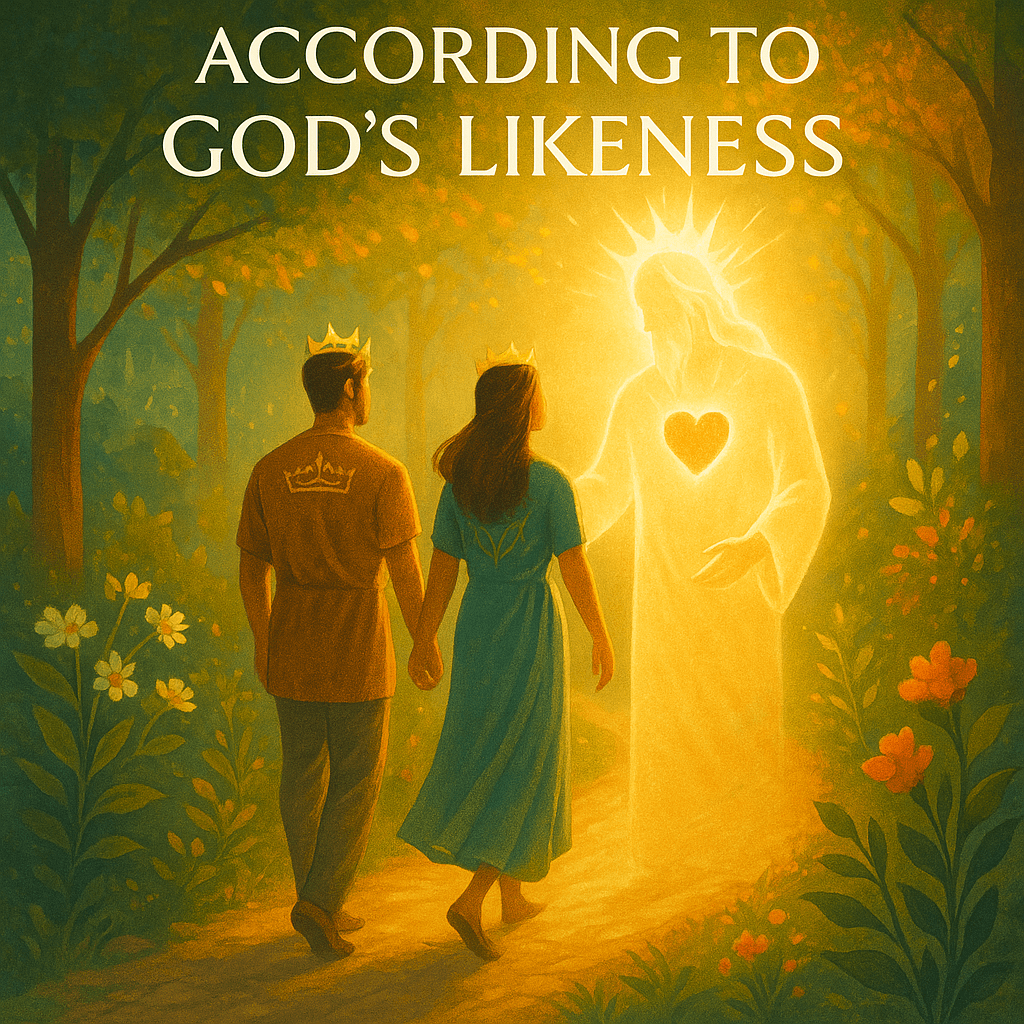
“Let us make humanity in our tselem, according to our demut…”
— Genesis 1:26
❌ MISUNDERSTOOD: Isn’t “Likeness” Just Another Word for “Image”?
In many modern translations and sermons, tselem (“image”) and demut (“likeness”) are treated as poetic synonyms. At best, demut is seen as a stylistic flourish—saying the same thing twice to emphasize human dignity.
But this is a mistranslation in both language and theology.
In ancient Hebrew thought—and in much early Christian theology—these words carried different meanings and different implications:
- Tselem = What we are given from the start
- Demut = What we are meant to grow into
Demut is not a synonym. It’s a trajectory.
It represents the spiritual and moral maturation of a person—our potential to become more like God in how we live, love, and rule.
📚 Ancient Roots of a Forgotten Distinction
Ancient Jewish interpreters—including Philo, the author of The Wisdom of Solomon, and later rabbinic voices—often distinguished image (as divine structure) from likeness (as realized character).
The early Church Fathers picked this up too:
“Humanity was made in the image of God, but must grow into His likeness.”
— Irenaeus of Lyon, Against Heresies (2nd century)
Gregory, Basil, and others taught similarly. For them, the image is innate, but the likeness is aspirational.
In other words, demut implies movement. It’s not something static. It’s becoming.
🧠 If Tselem is Freedom, Demut is Formation
As we saw last time, tselem grants us:
- Freedom
- Reason
- Creative power
- Capacity to rule
But freedom without formation is dangerous.
Just having the ability to choose doesn’t guarantee we’ll choose well.
Demut is the guiding pattern—the moral telos—for that freedom.
It’s the journey into wisdom, love, justice, and relational harmony.
It’s the process by which our God-given autonomy becomes God-reflecting maturity.
In Hebrew theology, this is what it means to “walk with God.” Think of:
- Adam and Eve walking in the garden
- Enoch and Noah “walking with God”
- Abraham being called to “walk before me and be blameless” (Genesis 17:1)
To walk with God is to become more like Him. That’s demut in action.
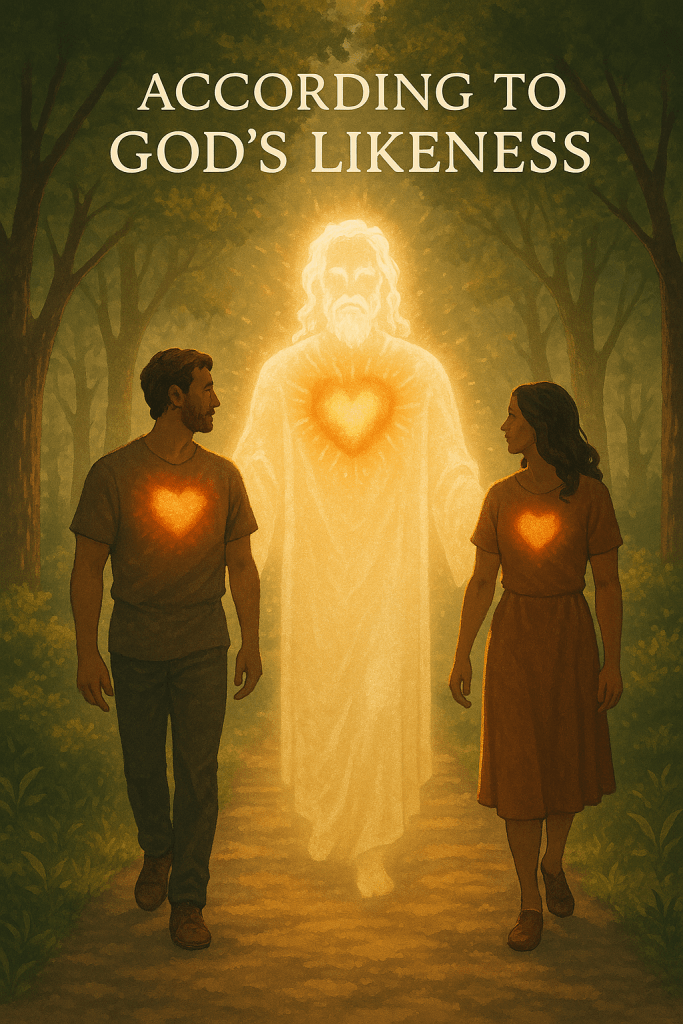
🧠🧡 From Image to Likeness: Logos and Agapē in Divine Harmony
If tselem (image) is our share in God’s Logos—His divine reason, freedom, and sovereign capacity—then demut (likeness) is our invitation to become like God who is agapē— a self-giving, other-centered love.
In other words:
Tselem = the structure of God
Demut = the heart of God
These are not separate identities. They are two parts of the same human calling. To be human, in the biblical vision, is not just to reflect God’s sovereignty (logos)—but to grow into His likeness (agapē).
This movement is seen clearly in the pattern of Scripture:
God creates humanity with tselem, sharing His logos, His rationality and authority. But He walks with humanity in the garden, forming them into demut, cultivating agapē, the love that governs how sovereignty is exercised.
Jesus, of course, embodies both perfectly:
“The Son is the radiance of God’s glory and the exact charaktēr [imprint] of His being.”
— Hebrews 1:3
He is the Logos made flesh (John 1:14), and the agapē poured out on the cross (1 John 4:10).
He doesn’t just reason like God—He loves like God.
And this is our telos as well:
We were made in God’s image (to reflect His wisdom), and we are called to grow into His likeness (to live His love).
💘 Why Would God Give Us Freedom That Could Be Misused?
If God is all-wise, why give us dangerous gifts like sovereignty and free will?
The only answer that makes sense is agape.
Because God is love, He creates beings who are free. Not so they will inevitably rebel—but so that they can freely grow into relationship, into moral likeness, into love.
Love can’t be programmed.
It must be chosen.
God prefers the risk of real relationship over the ease of robotic obedience.
Demut, then, is not just moral imitation. It’s relational formation.
It’s becoming like the God who invites us to walk with Him, in trust, over time.
🚶 Walking with God: The Original Path to Likeness
From the very beginning, God’s intent was not just to create image-bearers, but to walk with them into likeness. The garden was not a static paradise—it was a classroom of love, wisdom, and formation.
“They heard the sound of the Lord God walking in the garden in the cool of the day…”
— Genesis 3:8
This short but evocative line hints at what had been God’s regular pattern: walking with humanity. Before sin fractured the relationship, the Creator and the created shared the same path. In Hebrew thought, to walk with someone is to be taught by them, shaped by them, to learn not just through words but through life shared.
In fact, many Old Testament passages emphasize this “walking” as a form of divine teaching:
“He has told you, O man, what is good… to do justice, to love mercy, and to walk humbly with your God.”
— Micah 6:8
“I will walk among you and be your God, and you shall be my people.”
— Leviticus 26:12
“Blessed are all who fear the Lord, who walk in His ways.”
— Psalm 128:1
Here, teaching and walking are intertwined. Wisdom isn’t only taught—it’s caught along the way.
This pattern is fulfilled in the person of Jesus, who becomes our Rabbi on the road, walking with disciples, shaping them into His likeness—not by force, but through invitation and journey.
So when we speak of demut as the journey into love, this isn’t abstract spirituality—it’s a return to God’s original vision. Humanity was made to walk with God, step by step, choice by choice, maturing into agape through shared presence, wise guidance, and relational love.
To grow into God’s likeness is to walk with Him until His character becomes ours—not through coercion, but through companionship.
💘 Love Is Always Becoming: Why Perfection Must Grow
Love, by its very nature, cannot be static. It is relational, dynamic, and ever unfolding. This means that God could not create humanity in a state of finished perfection—not because He lacked the power, but because love, if it is to be real, must be chosen and grown into.
To be perfect as God is perfect isn’t to be instantly flawless, but to become complete in love (teleios in Matthew 5:48). That kind of perfection is mature, not mechanical.
This is why demut—our growing into God’s likeness—is so essential. It’s not an afterthought. It’s the point.
God didn’t want robots who reflexively obey.
He wanted children who grow up in love.
As St. Basil put it:
“mankind is created with the image but is entrusted to “building” the likeness themself through their own free-choice. Humans are an “artisan” with the power within themself to obtain to the likeness through their own activity. God gives them the required prerequisites but expects humans to play a role in forming themselves. In this way the reward for the work becomes their own.”
This vision—of humanity walking with God, growing over time into divine likeness—is not a compromise or plan B. It’s the very essence of demut.
Because love that is static is not love.
And perfection that does not grow is not God’s perfection.
The likeness we’re called into isn’t just a moral checklist. It’s a relational journey—an eternal unfolding of love in freedom, as we walk with God and become more like Him.
❌ The Myth of Static Perfection: Why the Fall Makes More Sense Than We Thought
Much of modern Western Christianity has inherited a deeply flawed view of human perfection—one shaped more by Greek philosophy and Enlightenment ideals than by the Hebrew Scriptures or early Christian thought.
In this view, “perfection” is imagined as static flawlessness—a frozen state of moral and behavioral purity from which any deviation is catastrophic. In this model, Adam and Eve were created perfect, placed in a perfect environment, and simply “messed it up.” The Fall becomes an absurd mystery: Why would perfect humans, in perfect conditions, make such a ruinous choice?
But the ancient biblical vision—especially in the Hebrew words tselem and demut—paints a very different picture.
Humanity was never created in static perfection, but in dynamic potential.
God made us in His image (tselem), granting us freedom and reason, so that we could grow into His likeness (demut). This was always the design. Not instant moral perfection, but the capacity to mature in love.
And that changes everything.
Love, by its very nature, cannot be programmed. It cannot be “installed” like software. It must be chosen, cultivated, and grown in relationship. This is why God chose to walk with humanity in the garden (Genesis 3:8)—not to control, but to accompany us on the path of becoming.
In fact, this was God’s mode of teaching all along:
“Impress [these commands] on your children. Talk about … when you walk along the road…”
— Deuteronomy 6:7
To walk with God is to be his children as intended, learning and being formed by God as He walks with us as a loving Father.
As St. Irenaeus explains:
“Humanity was not made perfect from the beginning, but was to receive perfection by progressing and growing… God has granted ….that by continuing to behold God, humanity might grow by communion with Him.”
— Irenaeus of Lyon, Against Heresies, Book IV
This means the Fall didn’t happen from the summit of static perfection, but from the tension of freedom within an unfolding relationship. Adam and Eve were made good, not finished. They were given the image—but not yet the full likeness.
The tragedy of the Fall, then, is not the loss of some abstract moral status—it’s the breaking of a relationship, a detour from the intended journey of maturing into love.
To be created in God’s image is to be given the capacity to love, rule, and walk with Him.
To grow in His likeness is to choose to keep walking.
That’s demut.
And that’s why the Christian story doesn’t begin with perfection lost, but with love invited.
🌾 Demut as Divine Pedagogy
All throughout the Scriptures, we see demut expressed not as a one-time achievement but as an educational process:
- God meets humanity where they are (divine accommodation)
- God offers covenant and instruction (Torah)
- God sends prophets, priests, and kings to guide and correct
- God ultimately sends Jesus—the Logos in flesh—as the perfect likeness of God
In Christ, we see the fullness of tselem and demut together:
“The Son is the radiance of God’s glory and the exact representation (charaktēr) of His being.” — Hebrews 1:3
He is the tselem realized and the demut fulfilled.
And through Him, we are invited to grow into that same likeness:
“…until Christ is formed in you.” — Galatians 4:19
“We are being transformed into the same image from glory to glory.” — 2 Corinthians 3:18
🔁 Demut is the Return to Shabbat
Remember: Shabbat was the original goal—divine harmony, flourishing, God dwelling with His people.
Demut was not only God’s original intention for humans but it is also the way back.
It’s the recovery of our vocation as rulers and co-laborers with God—not by coercion, but through character. Not by domination, but by divine love maturing in free humans.
The more we walk with God, the more we become like Him.
And the more we become like Him, the more we’re able to steward, love, create, and rest in the way of shalom.
🔑 Word Summary: Demut
- Literal Meaning: Likeness, resemblance, growth into form
- Biblical Role: The telos of being human—maturing into God’s character through walking with Him
- Theological Meaning: Our journey from free creatures to Christlike children; the intended outcome of our divine image
- In Our Words:
Demut is the moral and spiritual becoming that flows from our freedom. It is the process of growing into the likeness of God—not through coercion, but through walking with Him in trust, love, and wisdom.
🔜 What Comes Next:
Torah
The loving guidance of God, not as static law, but as an unfolding invitation to maturity in love and wisdom.
 The Logos of Agape
[…] Mistranslated Series: Word 5 -Demut (according to God’s likeness) […]
LikeLike