Word 7:
Shalom
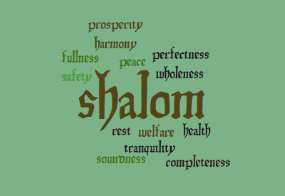
Hebrew: שָׁלוֹם (shalom) – peace, wholeness, harmony
Greek (LXX): εἰρήνη (eirēnē) – peace, unity
The Wholeness We Were Made For
“God saw all that He had made, and behold, it was very good…”
— Genesis 1:31
“They shall beat their swords into plowshares…
Nation shall not lift up sword against nation…
They shall all sit under their own vine and fig tree,
and no one shall make them afraid.”
— Micah 4:3–4
❌ Mistranslated or Misunderstood?
We often translate shalom as peace—but in English, peace usually just means the absence of conflict.
Shalom is far more than that.
In its Hebrew context, shalom means wholeness, completion, flourishing, harmony, well-being, and restorative justice all woven together. It speaks not just to what is missing, but to everything being in its right place, right relationship, and right function.
To say something is shalem (from the same root) is to say it is complete. That’s why in Scripture, shalom can refer to:
- healed bodies
- restored relationships
- fair measurements
- safe homes
- just societies
- a reconciled creation
When someone in ancient Israel said shalom, they weren’t just saying “peace be with you.”
They were saying, “May you be whole. May nothing be missing. May all be well—within you, around you, and between us.”
🪷 The Wholeness at the Heart of Creation
When God completes creation in Genesis 1 and declares it “very good,” He’s not just affirming its quality—He’s pronouncing its shalom.
Everything is in its proper place:
☑️ Light and dark
☑️ Sky and sea
☑️ Earth and creatures
☑️ Humans and God
There is order, rhythm, and relational harmony.
God walks with humanity. Humanity is at home with the earth. There is no shame, no violence, no division.
Shabbat and Shalom converge—a creation at rest and in harmony with its Creator.
Shalom is the full bloom of agape and logos, expressed through tselem and demut, guided by torah.
It is what we were made for.
🌱 Shalom Is Relational, Not Just Personal
The modern world often treats peace as private: inner calm, personal escape, or individual happiness.
But biblical shalom is deeply relational and communal. You cannot have shalom by yourself.
To have shalom is to live:
- in right relationship with God
- in mutual care with others
- in gentle stewardship of creation
- in alignment with yourself—your body, mind, and calling
Shalom is right relationship everywhere.
That’s why prophets like Isaiah and Micah describe shalom with vivid images:
“They shall sit under their own vine and fig tree, and no one shall make them afraid.”
Micah 4:4
Shalom means there’s no need to hoard, no fear of violence, no injustice in the system.
It’s a sustainable harmony rooted in God’s presence and love.
💔 Shalom Broken, Longed For, and Promised Again
Genesis 3 tells us not just the story of sin—but of shalom disrupted.
- The relationship with God is marked by hiding.
- The relationship between humans becomes blame and division.
- The relationship with creation becomes painful toil.
Shalom is fractured.
The rest of the Bible becomes the story of God’s commitment to restore it.
This is why the Hebrew prophets longed for a day of peace, not as escapism, but as re-creation.
And why the angels at Jesus’ birth proclaim,
“Glory to God in the highest, and on earth shalom to all!” (Luke 2:14)
Jesus isn’t just offering forgiveness. He is announcing the return of shalom.
Not just peace with God in a spiritual sense—but the restoration of all things in love, justice, and harmony.
🌅 Shabbat and Shalom: A Rhythmic Interplay
One of the most common greetings in Jewish tradition is “Shabbat Shalom.” On the surface, it seems simple—“Sabbath Peace.” But the phrase holds a profound theological depth that illuminates the relationship between these two rich biblical concepts.
Shabbat is the seventh-day rhythm of God’s restful reign—not a retreat from creation, but a dynamic, engaged celebration of it. It is the divine pause that declares: “All is as it should be.” Shabbat represents God’s intention for creation to function in harmony, without scarcity, exploitation, or fear. It is both a practice and a promise—a weekly foretaste of the world made whole.
Shalom, in turn, is the very wholeness that Shabbat signifies. If Shabbat is the rhythm, Shalom is the result. Shabbat is the gift that shapes our time; Shalom is the gift that shapes our relationships. When someone says “Shabbat Shalom,” they are not just wishing you a restful Saturday. They are praying that you will experience the peace of God’s completed work, that your time, relationships, and even your inner life will rest in wholeness.
But this harmony isn’t passive. Shalom is not an ascetic escape or static condition—it is the active process of creating and maintaining God’s rhythm. To pursue Shalom is to build and preserve Shabbat in every dimension of life: in our homes, our neighborhoods, our policies, and our prayers. That’s why the Hebrew prophets often link peace and justice—because Shalom requires participation. It requires Sabbath living in a non-Sabbath world.
And this is what makes Shalom a fitting final word in our first seven-word chiasm. We began with Shabbat—the moment when God rests, not because He is tired, but because creation is whole, complete, very good. We now arrive at Shalom—the vision of that very wholeness made manifest in every sphere of life. Together, they form the bookends of Eden, the invitation and the aim, the rhythm and the result.
In this way, the phrase Shabbat Shalom becomes more than a weekly greeting. It becomes the heartbeat of the biblical story—an echo of creation’s beginning, a hope for its renewal, and a call to live today in the pattern of tomorrow.
🕊️ Shabbat and Shalom: Two Words, One Rhythm of Love
There’s a reason the ancient Jewish blessing is “Shabbat Shalom.”
It’s not just a pleasant greeting. It’s a profound declaration:
“May your sacred rest be filled with wholeness.”
“May your wholeness be found in sacred rest.”
Shabbat and Shalom are distinct—but deeply intertwined.
Shabbat is the rhythm of God’s restful, active presence in creation. Shalom is the wholeness and harmony that results when that rhythm is received and lived out in love.
Shabbat is the space God created for us to dwell with Him, in trust, dependence, and joy.
Shalom is what that space looks and feels like—when nothing is missing, nothing is broken, and all things are in right relationship.
And what binds them together—what makes both possible—is agape.
Agape is the logic of God’s love, the motive behind creation, the shape of Torah, and the purpose of humanity’s likeness to God.
Without agape, Shabbat becomes escapism or idleness. Without agape, Shalom becomes sentiment or shallow peace.
But with agape, both Shabbat and Shalom become the pulse of a world ruled by love.
Agape gives Torah its heartbeat, tselem and demut their dignity, and logos its wisdom.
So when we say “Shabbat Shalom,” we are echoing the deepest longing of creation:
“May you rest in God’s love.
May you live in God’s harmony.
May you become who you were always meant to be.”
This is why Shalom is the fitting end to this first movement in our series.
It doesn’t just complete the seventh word—it completes the entire seven-word chiasm that describes the original purpose of creation:
Shabbat – the space of divine rest
Agape – the motive of divine love
Logos – the means of divine wisdom
Tselem/Demut – the image and potential of humanity
Torah – the path of formation
Shalom – the goal of all things made whole
In the beginning, God wove a world of love.
Shabbat was its rhythm.
Shalom was its result.
And agape was the thread that held it all together.
🧩 How Shalom Completes the First Movement
We began this series with Shabbat, the climax of creation and God’s restful reign that was unhindered engaugement meant tobe without end.
And now we end with Shalom, the world as it should be—where God’s reign is lived, loved, and shared and maintained in every relationship.
- Agape was the why.
- Logos was the how.
- Tselem and Demut described who we are.
- Torah gave us a path.
- And Shalom is what it all aims toward.
Shalom isn’t a bonus.
It’s the blueprint.
And it’s what will be lost—then recovered—in the next movements of this journey.
🔑 Word Summary: Shalom
- Literal Meaning: Wholeness, completeness, harmony, well-being
- Biblical Function: Describes creation’s original state and God’s desired end for it
- Theological Meaning: The full flourishing of all creation in right relationship with God, others, self, and the world
In Our Words:
Shalom is the peace that comes when nothing is missing, nothing is broken, and all things are in loving relationship. It is the harmony that was, the hope that is coming, and the wholeness we were made for.
🔜 What Comes Next:
In the next part of this series—Fractured Shalom—we’ll explore seven more words that trace how shalom was lost and how the biblical narrative begins its long journey toward healing.
 The Logos of Agape
[…] Mistranslated Series: Word 7 – Shalom […]
LikeLike